3. First Impression Becomes the Foundation of a Brand
In branding business, first impression is extremely important.
Once a market recognizes a brand as “cheap,” it becomes very difficult to later reposition it as a premium brand.
A good example is UNIQLO.
For many years in Japan, UNIQLO was widely recognized as a low-priced fast fashion brand. However, outside Japan, where such preconceptions are weaker, the brand is often evaluated much more highly.
Today, UNIQLO collaborates with world-class designers and has achieved a remarkably high level of quality and product development. Even so, in Japan, the earlier image of being an inexpensive clothing brand still partially remains.
This clearly shows how powerful first impressions can be in branding.
When introducing Devon & Drew to the Japanese market, we paid tremendous attention to this “first appearance” in the market.
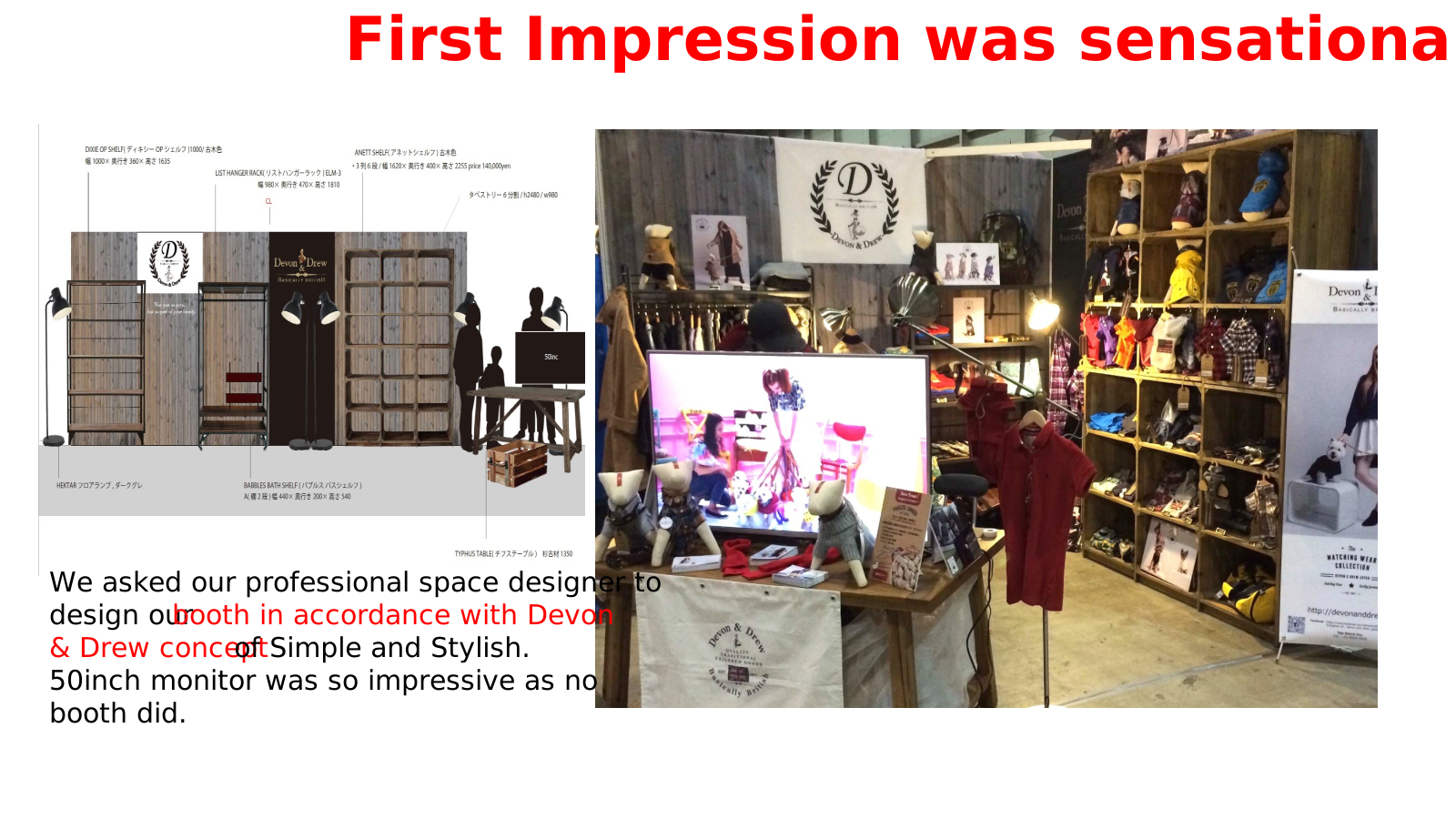
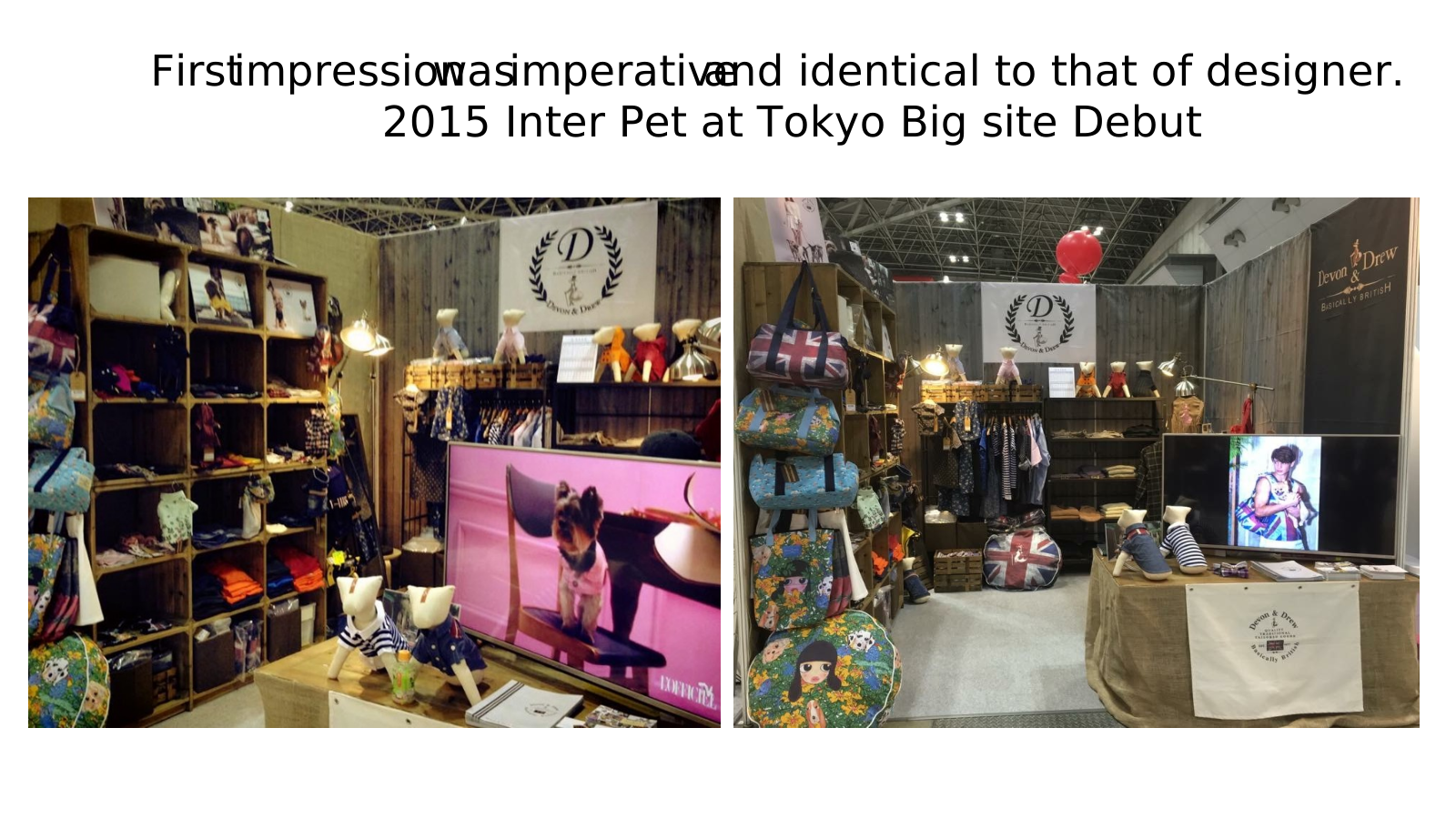
At exhibitions such as Inter Pet Tokyo, we did not simply display products on shelves. Instead, we focused on how to express the brand’s worldview through the entire booth space.
Large tapestries featuring the brand logo were placed prominently on the walls. Large monitors displayed visual movies and fashion images, including materials published in the Paris fashion magazine L’Officiel.
Our intention was not to create an ordinary pet apparel booth, but rather to present Devon & Drew as a lifestyle brand with its own atmosphere and identity.
In fact, at Inter Pet Tokyo 2015, I believe there were very few pet apparel booths that invested so thoroughly in creating a strong brand image and visual identity.
A brand is never built by products alone.
What matters greatly is how the brand is remembered the very first moment it appears in the market.
4. Stand Alone
Every brand possesses its own culture and individuality.
The moment a brand stands on the same stage as ordinary products, its unique value gradually begins to disappear.
That is why a brand must carry a different atmosphere from others around it.
In developing Devon & Drew in Japan, I always valued the concept of “Stand Alone.”
This did not simply mean “standing out.”
It meant avoiding becoming “just another brand.”
At department stores and exhibitions, if a brand is displayed in the same way as everyone else, it inevitably gets pulled into the world of price comparison.
However, a true brand should not merely be compared.
It should be chosen.
To achieve this, consistency is required in every aspect:
the sales space,
visual presentation,
customer experience,
and the overall worldview of the brand.
At Inter Pet Tokyo, we focused not on increasing the number of products displayed, but on creating a space where visitors could instantly understand what kind of brand Devon & Drew was.
As a result, many visitors stopped in front of the booth and sensed that it carried a completely different atmosphere from ordinary pet apparel brands.
In branding strategy, one of the most important things is to avoid being absorbed into meaningless competition.
Rather than being buried in price competition, a brand must establish its own unique position within the market.
I believe this is what gives a brand long-term strength and sustainability.